

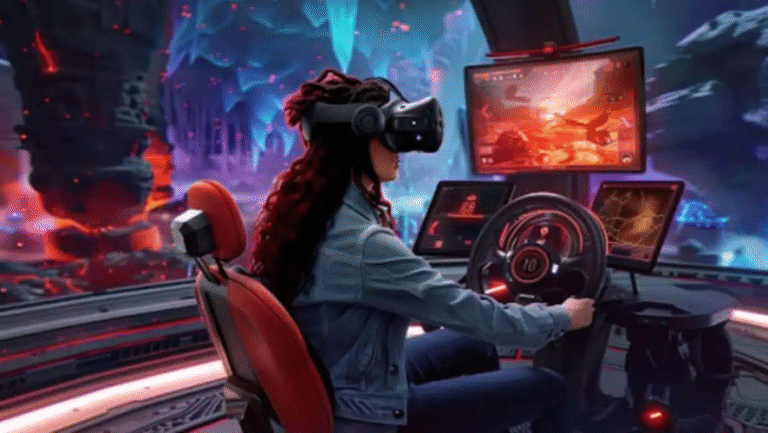
The rise of cloud gaming signifies a pivotal change in how players engage with video games. By eliminating the need for costly hardware, platforms like Google Stadia and Microsoft xCloud are reshaping accessibility. This shift not only democratizes gaming but also sparks innovation across the industry. Yet, significant challenges, particularly regarding network latency, pose questions about the future of this technology. How will these obstacles be addressed as the landscape continues to evolve?
The Evolution of Gaming Technology
As gaming technology has advanced, it has transformed from simple pixelated graphics to immersive virtual environments that captivate players worldwide.
Graphics advancements have enhanced realism and engagement, while reductions in streaming latency have enabled smoother gameplay experiences.
These developments not only elevate player immersion but also foster a sense of freedom, allowing gamers to explore vast worlds without the constraints of outdated technology.
See also: Best Home Server Setup Guide
Major Players in the Cloud Gaming Market
The cloud gaming market has become a dynamic arena characterized by fierce competition among several key players.
Google Stadia and Microsoft xCloud offer robust platforms, while Nvidia GeForce enhances performance with cutting-edge technology.
Sony PlayStation and Amazon Luna vie for consumer attention, bolstered by strategic partnerships such as Ubisoft’s.
These entities shape the landscape, driving innovation and expanding gaming accessibility across diverse audiences.
Future Trends and Challenges in Cloud Gaming
A rapidly evolving landscape characterizes the future of cloud gaming, marked by both promising advancements and significant hurdles.
Key trends include enhanced user accessibility and the integration of advanced technologies.
However, challenges such as network latency persist, potentially undermining the seamless experience users crave.
As the industry navigates these complexities, stakeholder collaboration will be essential for optimizing performance and broadening audience reach.
Conclusion
As cloud gaming ascends like a phoenix from the ashes of traditional gaming paradigms, it heralds a new era of accessibility and innovation. Major players are reshaping the landscape, yet challenges akin to the mythical Sisyphus remain—network latency poses a formidable hurdle. Nevertheless, with relentless advancements and a commitment to improving user experiences, the future of cloud gaming promises to be as dynamic and transformative as the games themselves, inviting players into a realm unbound by hardware limitations.